Varicose Veins & Leg Ulcers: How They're Connected
Varicose veins and leg ulcers often go hand-in-hand. Learn how poor circulation links them — and what early signs to watch out for before it worsens.
Dr Vascular Care
7/17/20252 min read
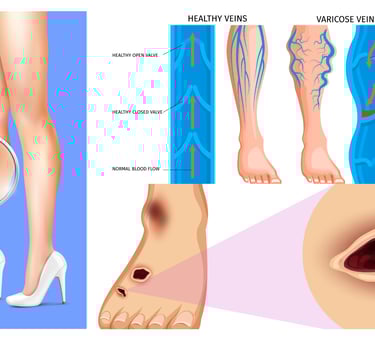
What are Varicose Veins? What are Leg Ulcers?
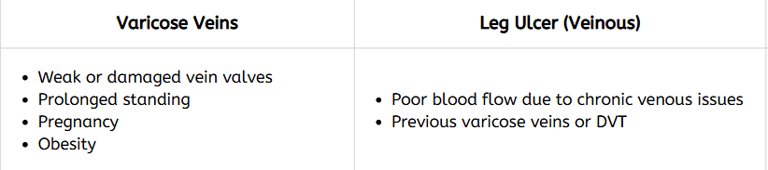
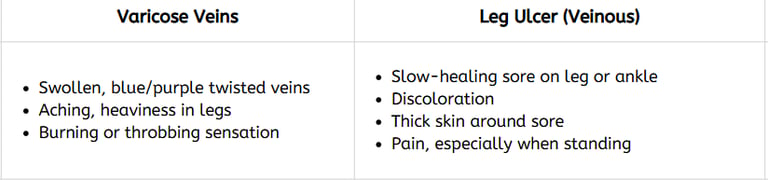
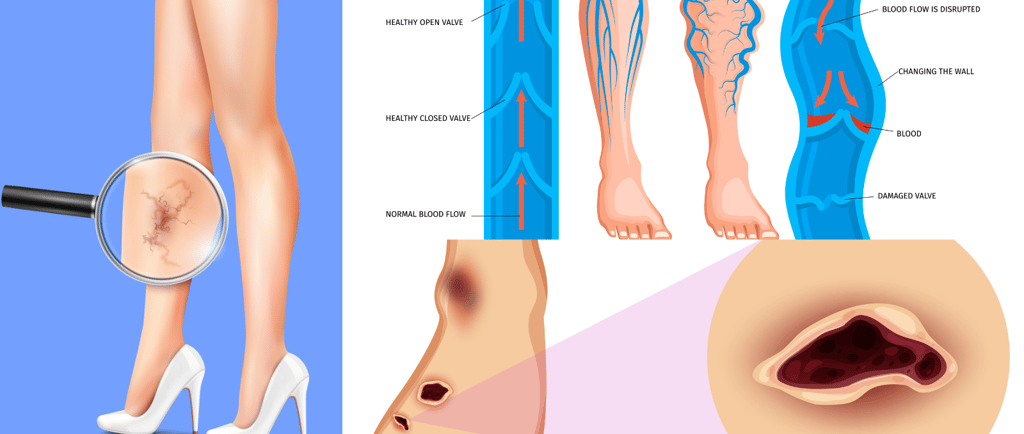
Varicose veins are swollen, twisted veins that often appear just under the skin in the legs. They occur when valves in the veins become weak or damaged, causing blood to pool and veins to enlarge.
Leg ulcers are open sores or wounds that do not heal properly. When they result from poor circulation—particularly due to venous insufficiency—they’re known as venous ulcers.
Understanding Two Conditions That Often Go Hand-in-Hand
Varicose veins and leg ulcers are two common conditions affecting the lower limbs — and while different in nature, they are often connected. Both are related to poor circulation in the veins and can lead to discomfort, complications, and long-term issues if not properly treated.
How Are They Linked?
In many cases, leg ulcers are a complication of chronic varicose veins. When blood pools in the veins for too long, it increases pressure in the lower legs. Over time, this can damage the skin and tissues, eventually leading to ulcers.
So while not all people with varicose veins will develop ulcers, venous ulcers almost always stem from underlying vein issues.
Causes, Symptoms, Risk Factors, Complications, Prevention
Varicose veins and leg ulcers are two common conditions affecting the lower limbs — and while different in nature, they are often connected. Both are related to poor circulation in the veins and can lead to discomfort, complications, and long-term issues if not properly treated.
In Mauritius, awareness and timely care around these conditions remain limited.
Here's what you need to know.
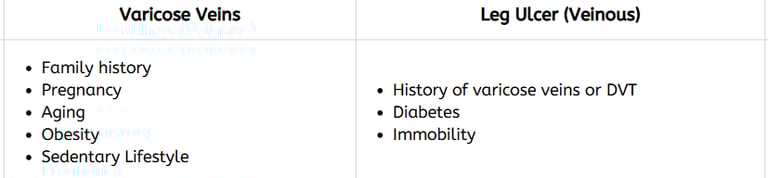
Key Differences Between Varicose Veins and Leg Ulcers
Causes
Symptoms
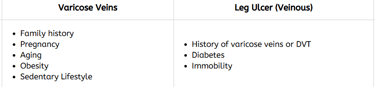
Risk Factors
Complications
Prevention
Treatment Options
Most cases are manageable with minimally invasive procedures and lifestyle changes.
Compression therapy: Improves blood flow and reduces swelling — essential for both conditions.
Sclerotherapy: Injection to close smaller varicose veins.
Endovenous ablation: A heat-based treatment to seal large veins.
Wound care: For ulcers, cleaning and dressing are critical to healing.
Surgical vein removal (in rare, severe cases).
Treating varicose veins early can significantly reduce the risk of ulcers forming later.
Diagnosis & When to See a Specialist
If you experience persistent leg swelling, skin discoloration, visible veins, or wounds that aren’t healing, it’s time to consult a vascular specialist.
A clinical examination, Doppler ultrasound, or vein mapping may be used to assess blood flow and determine the best course of action.
Need help with varicose veins or leg ulcers ?
Dr Kunal Sibartie, vascular specialist provide consultation in Mauritius - Grand Baie, Port-Louis and Moka.