Dialysis Access: Fistulas and Grafts
Explore how dialysis fistulas and grafts are created — essential knowledge for safe and effective hemodialysis access.
Dr Vascular Care
7/17/20253 min read
Understanding how your body is prepared for life-saving hemodialysis
For people living with kidney failure, hemodialysis becomes an essential part of life — filtering toxins and excess fluids from the blood when the kidneys can no longer do so. But to perform dialysis effectively, a reliable access point to the bloodstream is needed. This is where dialysis access, through arteriovenous (AV) fistulas or grafts, comes in.
While both options serve the same purpose, they are not the same — and understanding the difference can help patients and families feel more in control of their health decisions.
What is Dialysis Access?
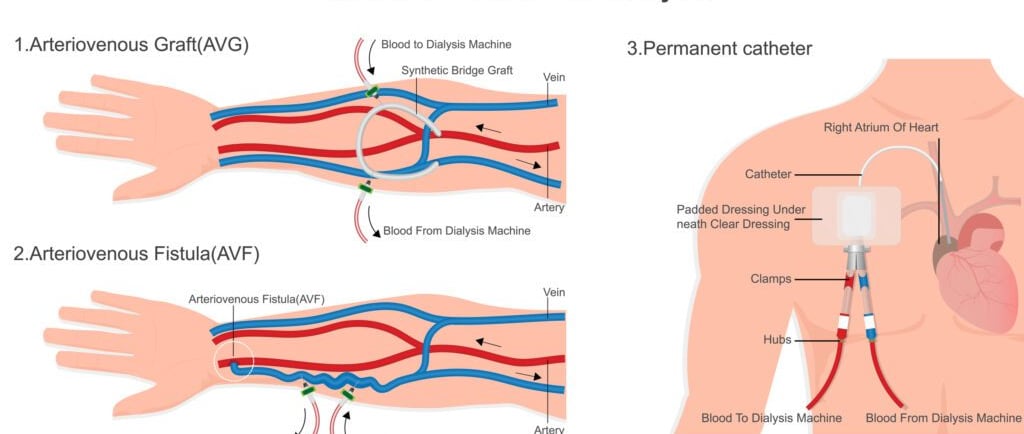
Dialysis access is a surgically created connection between your bloodstream and the dialysis machine. It must allow high-volume, repeated access to your blood vessels several times per week, while minimizing complications.
The two most common forms are:
AV Fistula: A natural connection made between an artery and a vein.
AV Graft: A synthetic tube used to connect an artery and a vein.
Both are placed in the arm, usually under local or regional anesthesia, and become the “lifeline” for dialysis treatment.
What is an AV Fistula?
An AV fistula is created by directly connecting a vein to an artery. Over time (usually 4–8 weeks), this connection causes the vein to enlarge and strengthen, making it easier to access with dialysis needles.
Advantages:
Lower risk of infection or clotting
Longer lifespan (can last years)
Considered the gold standard in dialysis access
Disadvantages:
Takes weeks or months to mature
Not suitable for everyone (e.g., if veins are too small or damaged)
What is an AV Graft?
When a fistula isn’t possible, a graft may be used instead. A soft synthetic tube connects the artery and vein, sitting just under the skin.
Advantages:
Can be used more quickly (as early as 2–3 weeks post-surgery)
Suitable for patients with small or fragile veins
Disadvantages:
Higher risk of infection and clotting
May need to be replaced sooner than a fistula
Choosing Between a Fistula and a Graft
The decision depends on several factors, including:
The size and condition of your blood vessels
Your overall health
How urgently dialysis is needed
History of previous access issues
A vascular surgeon and nephrologist will assess your situation and recommend the best option. In most cases, if your veins are suitable, a fistula is preferred due to its durability and lower complication rate.
Possible Complications
Both fistulas and grafts carry potential risks, such as:
Infection:
Fistula: Low risk
Graft: Higher risk
Clotting or Blockage
Fistula: Less common
Graft: More frequent
Aneurysm (bulging vein)
Fistula: Possible over time
Graft: Possible
Steal syndrome (cold hand or pain due to diverted blood)
Fistula: Rare
Graft: Can occur
Prompt treatment of these complications is essential. Pain, swelling, or lack of blood flow should never be ignored.
How to Take Care of Your Access
Proper care helps extend the life of your dialysis access:
Keep it clean and dry
Avoid carrying heavy items or sleeping on that arm
Never allow blood pressure or blood draws from the access arm
Monitor for warmth, redness, or swelling
Check daily that you can feel the “thrill” – a buzzing sensation that indicates blood is flowing properly
Your healthcare team will teach you how to monitor and protect your access site.
When to Seek Help
Contact your dialysis team or surgeon immediately if you notice:
Fever or signs of infection
Bleeding that won’t stop
Change in the thrill or pulse in the access site
Severe pain or color change in the hand or arm
Early intervention can prevent serious complications or loss of the access site.
Final Word
Dialysis access is more than a medical procedure — it’s your gateway to survival. Whether with a fistula or a graft, the goal is the same: safe, reliable, and long-term access to your bloodstream so dialysis can do its job.
Choosing the right access is a personal, medical decision best made in partnership with your care team. With the right support and proper care, your dialysis access can serve you well for years.